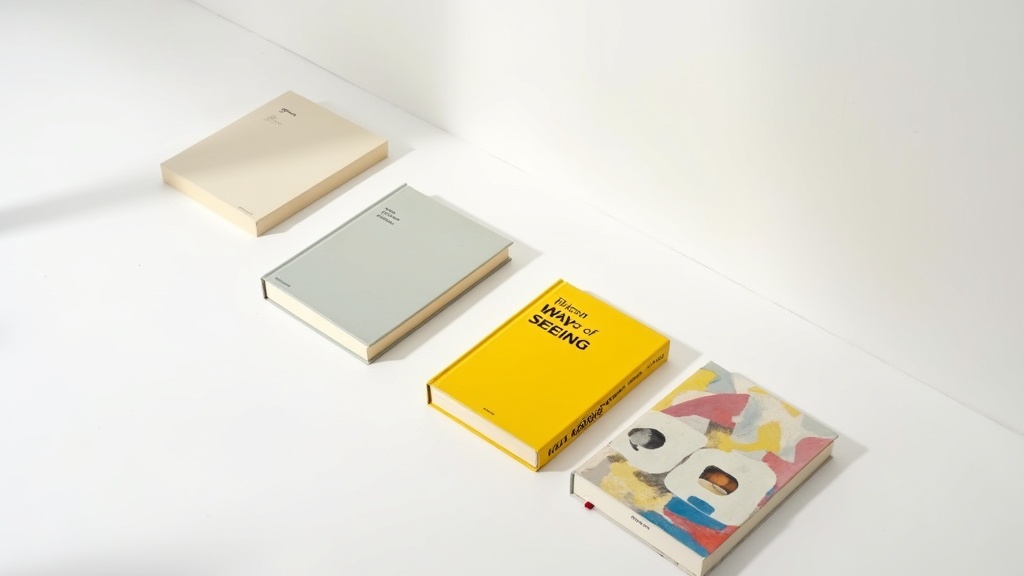
7 Art Books That Will Actually Change How You See
These aren't coffee table decoration. These are books that will genuinely change how you look at art — written by people who actually want you to understand what you're seeing.
I read a lot of art books. Most are written for other art historians. These seven are written for you — the person standing in front of a painting wondering what you're supposed to feel. They'll give you frameworks, permission to trust your instincts, and ways to articulate what you already sensed.
I've organized them by what kind of reader you are and what you're trying to learn.
If You're New to Art and Want a Foundation
Ways of Seeing by John Berger
First published in 1972. Still essential.
Berger was an art critic, novelist, and — here's the important part — someone who actually believed regular people deserved to understand art. This book started as a BBC series (you can still watch it), and the book version keeps that accessible, conversational tone.
The central argument: how we look at art is shaped by invisible forces — class, gender, wealth, reproduction technology. A famous painting means something different hanging in a church versus printed in a magazine. Berger shows you these frameworks without being preachy about it.
What you'll actually learn: Why the same painting feels different in a museum than it does in a textbook. Why context matters more than most people think. How to look critically without feeling cynical.
Best for: Anyone who's ever said "I don't get art" and meant "nobody ever taught me how to look."
The Story of Art by E.H. Gombrich
First published in 1950. Updated regularly.
This is the art history book that doesn't feel like homework. Gombrich writes like a friend who happens to know everything about Western art. He explains the why of artistic movements, not just the what and when.
Yes, it centers Western art — that's its limitation. But as a foundation for understanding how artistic styles evolve and respond to each other, it's unmatched. The writing is conversational, opinionated (Gombrich has favorites and isn't shy about them), and genuinely engaging.
What you'll actually learn: How to recognize different artistic periods and movements. Why artists in different eras made the choices they did. A mental timeline that helps you place unfamiliar works in context.
Best for: Building a foundation you can hang everything else on. Read this, then go to a museum and watch everything click into place.
If You Want to Understand Contemporary Art
What Are You Looking At? 150 Years of Modern Art in a Nutshell by Will Gompertz
Gompertz was a director at the Tate and is now the BBC's arts editor. He wrote this book because he got tired of explaining modern art to people who felt intimidated by it.
Here's his approach: each chapter covers a major modern art movement (Impressionism, Cubism, Surrealism, Abstract Expressionism, Pop, etc.) with the same structure. What was happening in the world when this started? What were artists reacting against? What did they actually do differently? And the question everyone asks: Is this even art?
His answer to that last question is always some version of "Yes, and here's why it matters." He's not a cheerleader — he'll tell you when he thinks something is overrated — but he's fundamentally generous. He wants you to get it.
What you'll actually learn: How modern art movements connect to each other and to world events. Why abstraction happened when it did. How to read a contemporary artwork without feeling lost.
Best for: The person who walks into a modern art museum and thinks "I don't understand what I'm looking at." After this book, you will.
The Art Book by Phaidon
This is not a book you read cover to cover. This is a reference you'll keep coming back to.
Phaidon publishes A-to-Z collections of major artists, each entry featuring one representative work with a brief, jargon-free explanation. The genius is the alphabetical organization — you get medieval altarpieces next to video installations, Renaissance masters next to contemporary photographers. It breaks the "art history is a straight line" narrative and shows you connections across time.
When I visit a museum, I often pull this up on my phone to read about artists whose names I recognize but can't quite place. It's a cheat sheet, and I mean that as a compliment.
What you'll actually learn: A broad survey of major artists and works. Recognition of names and styles. Enough context to go deeper on the ones that interest you.
Best for: Your coffee table, yes — but the kind you'll actually open and use as a reference. Great for before or after museum visits.
If You Want to Understand How Artists Think
Seeing Is Forgetting the Name of the Thing One Sees by Lawrence Weschler
This is a book-length conversation between Weschler, a writer, and Robert Irwin, an artist who spent decades investigating perception itself. Irwin started as a painter, became obsessed with how we actually see, and eventually abandoned traditional art-making entirely to create light and space installations.
The title comes from something Irwin says about really looking at something — the moment when you stop categorizing it ("that's a tree") and start actually seeing it. This book is about that moment, and about Irwin's lifelong attempt to create conditions where that moment happens.
It's philosophical but not pretentious. Weschler is a journalist, not an art critic, and he asks the questions you'd ask. The result is a portrait of an artist's mind that feels intimate and genuine.
What you'll actually learn: How artists think about perception. Why some artists abandon traditional forms. The difference between looking and seeing.
Best for: Anyone who's ever stood in front of a contemporary installation and thought "what am I supposed to get from this?" This book won't give you answers, but it'll help you ask better questions.
If You Want to Think Like a Critic
Fail Better: Reckoning with Artists and Critics by Hal Foster
Foster is one of the most important art critics writing today, and this 2025 collection shows why. He's got the academic credentials (Princeton professor, October magazine editor) but he's also genuinely interested in how art functions in the world.
The title references Samuel Beckett: "Try again. Fail again. Fail better." Foster's essays explore how contemporary artists engage with failure — political failure, aesthetic failure, personal failure — and what art can do in a world that often feels broken.
This is denser than the other books on this list. Foster assumes some familiarity with contemporary art. But if you're ready to level up from "I want to understand what I'm seeing" to "I want to think critically about what art does," this is your next step.
What you'll actually learn: How serious art criticism works. Frameworks for analyzing contemporary art's relationship to culture and politics. Models for writing about art yourself.
Best for: Readers who've built a foundation and want to go deeper. Not for absolute beginners, but excellent for anyone ready to engage critically.
Criticism in Crisis: Art Writing and Its Discontents by various authors (2025)
This collection just came out and it's already shaping conversations. A group of working critics, curators, and artists debate the state of art writing: Is it too academic? Too commercial? Too disconnected from actual viewers? What's the point of criticism anymore?
Reading this won't teach you how to look at a painting. But it will show you how the people who write about art think about their job — and why so much art criticism feels inaccessible.
I include it because understanding why art writing is the way it is helps you navigate it. And because the debates here are genuinely interesting if you care about how culture gets discussed.
What you'll actually learn: Why art criticism is often difficult to read. What critics think their job actually is. How to read criticism more effectively.
Best for: People who read art reviews and wonder why they often feel so alienating. This book explains the structural reasons — and offers some alternatives.
Nadia's Top Pick
If you read ONE book from this list: Ways of Seeing by John Berger.
It's short. It's readable in a weekend. It will rewire how you look at everything — not just paintings, but advertisements, photographs, museum labels, Instagram feeds. Berger teaches you to ask the questions that matter: Who made this? For whom? What's being shown, and what's being hidden?
Those questions will serve you in any gallery, any museum, any encounter with visual culture. Everything else on this list builds on that foundation.
Where to Find These
Most are available through:
- Your local independent bookstore (support them!)
- Bookshop.org (supports independent bookstores online)
- Used bookstores (art books are often barely read and cheap)
- Your public library (Berger and Gombrich are usually in stock)
*This post contains affiliate links. If you purchase through these links, I may earn a small commission at no extra cost to you.*
What art books have changed how you see? Email me at nadia@artandabout.blog — I'm always looking for recommendations.