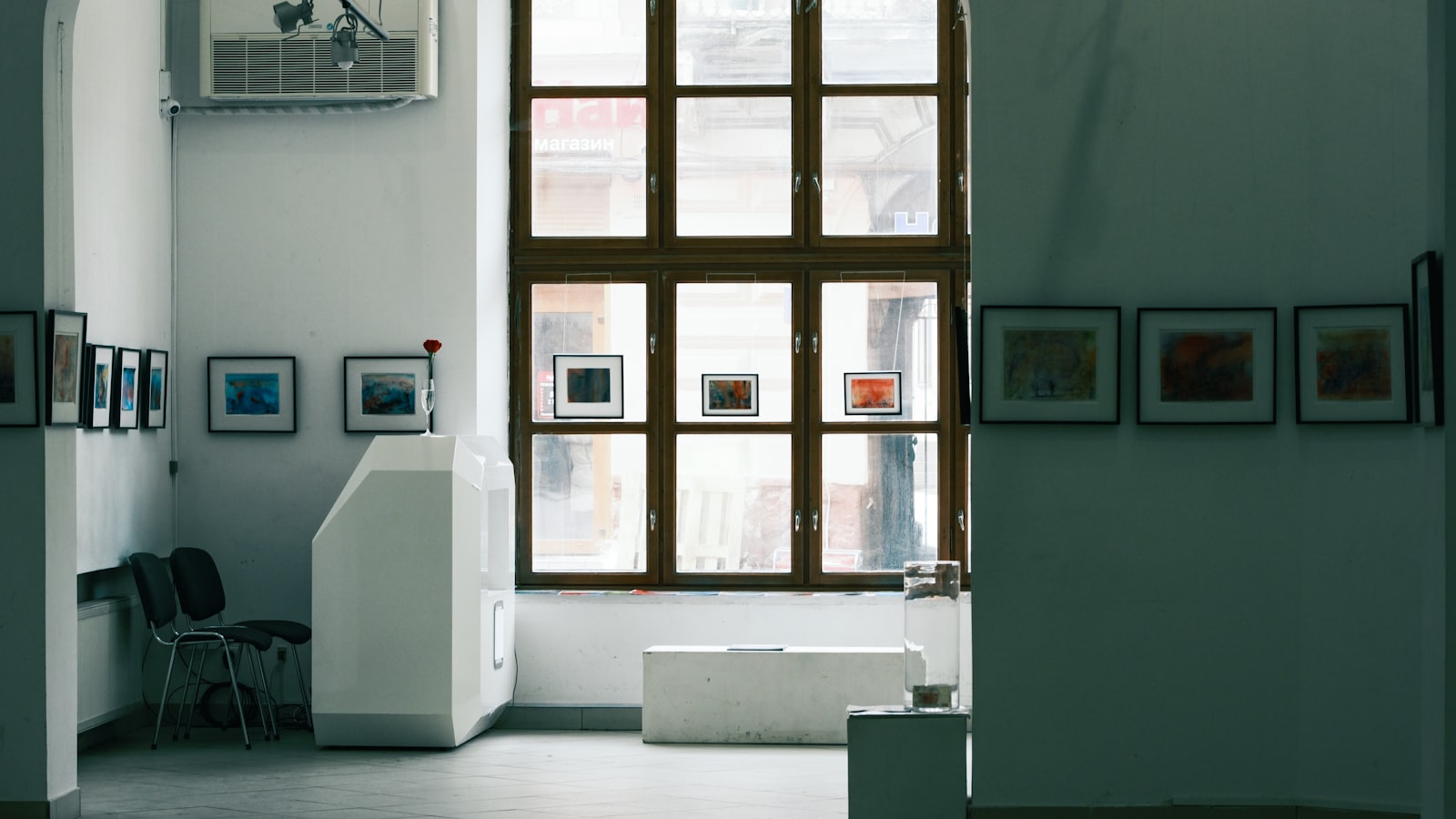
7 Contemporary Art Books That Actually Help You See More (Updated)
7 Contemporary Art Books That Actually Help You See More
Okay so if you've ever stood in a gallery and thought, am I supposed to be getting this? this is for you. I keep meeting smart, curious people who love looking at art but freeze the second the wall text starts sounding like a dissertation.
Here's the fix: read better art books. Not the ones that try to make you feel dumb. The ones that give you language, context, and confidence so you can walk into any show and actually enjoy yourself.
I picked seven books I genuinely recommend to friends, plus exactly who each one is for and how to read them without turning this into homework.
Why Books Still Matter If You Already Follow Art on Instagram
Instagram is great for discovery. It is terrible for depth.
A post gives you an image and maybe a caption. A good book gives you the backstory, the visual clues, and the bigger pattern so when you see a painting, installation, or video work in person, you notice more. You don't just scroll past it with your eyes. You actually look.
If you're art-curious but not trying to become an academic, this list is your lane.
1) What Are You Looking At? by Will Gompertz
If you want one book that makes modern and contemporary art feel way less intimidating, start here.
Gompertz walks through major movements from the 19th century forward in plain English, with humor and zero gatekeeping. You get the why behind Impressionism, Cubism, Conceptual art, and everything that follows, without feeling like you're cramming for an exam.
Best for: Beginners who want the big picture.
Why it works: It connects movements to real people and real cultural shifts.
Heads up: It's long. Read a chapter at a time, not cover to cover in one push.
2) Ways of Seeing by John Berger
This is the classic for a reason. Berger basically hands you a new set of eyes.
The central idea is simple and powerful: how we see an image is shaped by power, money, media, and context. Once this clicks, museum visits change. Advertising changes. Even your own camera roll changes.
Best for: Anyone who wants to think sharper about images, not just paintings.
Why it works: Short, provocative, and still incredibly relevant.
Heads up: Some examples are from the 1970s, but the framework holds.
3) How to Read Contemporary Art by Michael Wilson
This is your practical decoder for the stuff people call "confusing": installations, performance, video, conceptual work.
Wilson explains media, themes, and key artists in straightforward language. It's especially useful when you walk into a gallery with mixed media and don't know where to begin.
Best for: People who keep saying, "I don't get contemporary art."
Why it works: It gives you entry points instead of buzzwords.
Heads up: Keep this one nearby and dip in by topic.
4) The Story of Art Without Men by Katy Hessel
I need to talk about this one because it does something the standard canon books still fail at: it recenters women artists across centuries without making the book feel like homework or a scolding.
Hessel writes with urgency and clarity, and the range is huge. You come away with dozens of artists you should have learned earlier, from different periods and geographies, and you start noticing how narrow most "default" art histories are.
Best for: Readers who want a broader, more honest map of art history.
Why it works: Big scope, readable voice, excellent for self-directed discovery.
Heads up: It's substantial; treat it like a long-term companion.
5) Ninth Street Women by Mary Gabriel
If you're interested in New York art history, this is essential.
Gabriel focuses on Lee Krasner, Elaine de Kooning, Grace Hartigan, Joan Mitchell, and Helen Frankenthaler, and shows how these artists shaped Abstract Expressionism while being sidelined by the mythology around the men in their circle.
The writing is vivid, the research is deep, and suddenly the postwar New York scene feels human instead of mythic.
Best for: Readers who like art history with real personalities and conflict.
Why it works: Narrative nonfiction energy, serious scholarship, no dry tone.
Heads up: Long, but genuinely page-turning.
6) Why Is That Art? by Terry Barrett
This is the book I recommend when someone asks the eternal question: "Who decided this is art?"
Barrett breaks down major theories in accessible language and shows how to build an argument about an artwork instead of just saying "I like it" or "I hate it." It helps you move from reaction to reasoning without killing your instinctive response.
Best for: Readers who want to discuss art with confidence.
Why it works: Clear frameworks you can use immediately in museums and galleries.
Heads up: This one can read textbook-y in places, so skim strategically.
7) How to Be an Artist by Jerry Saltz
Yes, this is technically about making art, but it's one of the most human books about creative life I've read in years.
Saltz writes in short, direct, practical bursts. Even if you're not an artist, it resets how you look at risk, failure, and experimentation in contemporary work. You stop judging finished objects and start seeing process, doubt, and courage.
Best for: Creatives, blocked people, and anyone who wants to reconnect with curiosity.
Why it works: Encouraging without being cheesy.
Heads up: Read it in small chunks; it lands better that way.
How to Read Art Books Without Burning Out
You do not need to read these in order. You do not need to finish every page. You do not need to memorize movements.
Try this instead:
- Pick one "foundation" book: start with Gompertz or Berger.
- Pair it with one "lens" book: Hessel or Gabriel.
- Use one "toolkit" book: Wilson or Barrett before museum visits.
- Keep one "energy" book around: Saltz when your curiosity dips.
That combo gives you context, perspective, and momentum without turning art into homework.
Practical Info: Cost, Access, and Where to Find Them
If you don't want to spend a lot, do this:
- Check your public library first (and Libby/OverDrive for ebooks).
- Use used-book marketplaces for Gabriel and Gompertz, which are often discounted.
- Museum bookstores sometimes carry better art sections than big chains.
- Split buys with a friend and trade after reading.
If you're NYC-based, Strand and Printed Matter are always worth a stop. If you're elsewhere, independent bookstores usually have stronger art sections than people assume, especially if you ask the staff.
The Takeaway
The art world loves to act like you need special permission to have an opinion. You don't.
A good art book won't tell you what to think. It gives you better questions to ask while you're looking. That's the whole game.
If you're starting from zero, begin with What Are You Looking At? and Ways of Seeing. Then go look at actual art this weekend and test your new eyes.
Go see something.