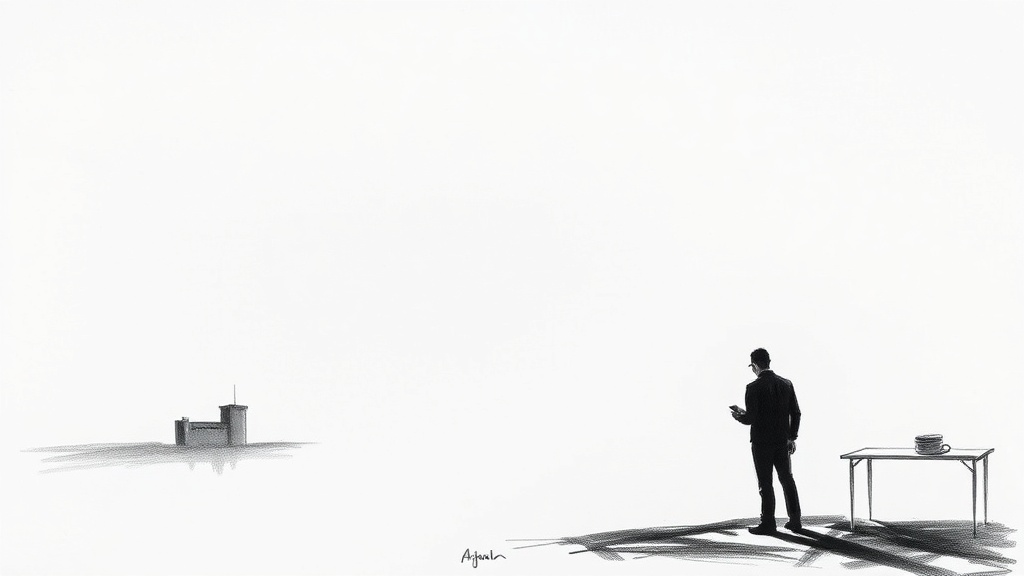
Ditch the Eraser: Using Negative Space to Shape Your Sketches

Quick Tip
Treat your eraser as a drawing tool that adds light rather than just a way to fix mistakes.
Ditch the Eraser: Using Negative Space to Shape Your Sketches
Studies in visual perception suggest that the human brain often prioritizes the "object" and ignores the surrounding area, which is exactly why many beginners struggle with proportions. When you focus solely on drawing a chair, you see a collection of wooden slats. When you focus on the negative space—the empty shapes between those slats—you see the actual geometry of the composition.
Negative space is not "empty" space; it is a structural tool. Instead of fighting with an eraser to fix a crooked line, change your perspective to look at the shapes the object creates rather than the object itself. This shift in focus moves you from drawing symbols (what you think an eye looks like) to drawing reality (the actual shapes and shadows present).
Practical Techniques for Sketching with Space
To refine your sketching, try these three specific approaches during your next studio session:
- The Silhouette Method: Before adding any internal detail, draw only the outer boundary of your subject. If you are sketching a botanical specimen, focus on the jagged edges of the leaves against the white of your Strathmore Bristol paper. If the silhouette looks correct, the proportions of the interior will almost always follow suit.
- The "Shape-First" Approach: Instead of drawing a coffee mug, look at the "C" shape formed by the handle and the triangle of air beneath it. Use a 2B graphite pencil to block in these shapes first. By defining the "nothingness," you create a container that forces your subject into the correct dimensions.
- Reverse Sketching: If you are working with charcoal or ink, try filling in the background entirely. By darkening the space around a subject using a compressed charcoal stick, the subject "emerges" from the light. This technique is particularly effective for high-contrast studies.
Common Pitfalls to Avoid
The biggest mistake is treating negative space as an afterthought. If you find yourself constantly reaching for an eraser to correct a limb or a corner, stop. Put the eraser down and look at the shape of the air surrounding that limb. If the space looks "off," your subject will look "off."
For those interested in how different mediums interact with surface area and texture, you might also enjoy reading about using found objects to build texture, which requires a similar understanding of how much space a material occupies in a three-dimensional plane.
"Don't draw the object; draw the space the object occupies."