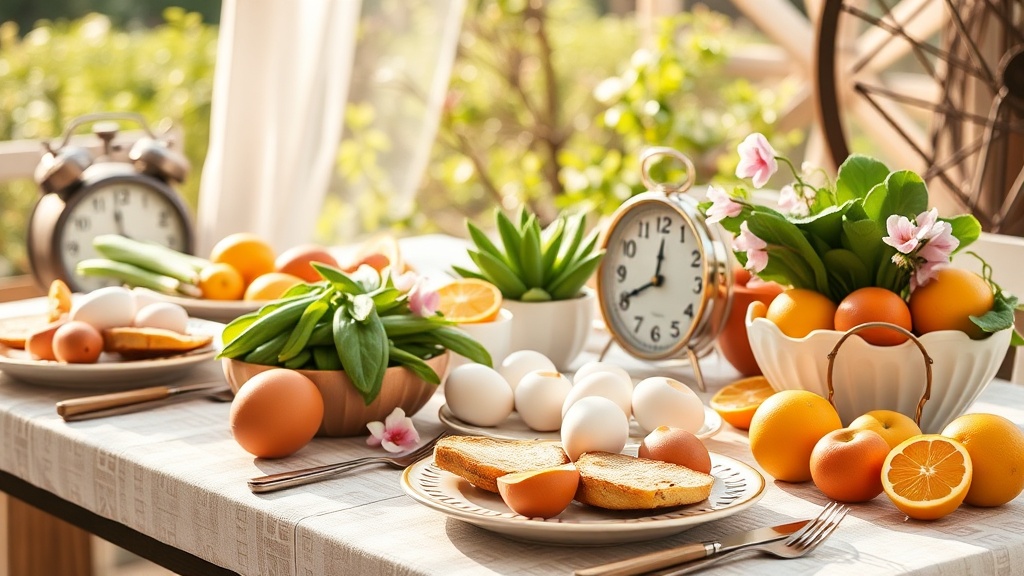
Easter Bio‑Harmony Brunch: Sync Meals with Your Circadian Rhythm

Hook: Does the “spring‑forward” clock change leave you feeling sluggish at brunch? What if the very foods you serve could help your body adjust and thrive?
Context: Easter lands just weeks before daylight‑saving time, a perfect moment to reset both your calendar and your internal clock. Bio‑harmony eating—timing nutrient‑dense meals to match your circadian rhythm—offers a science‑backed way to turn a festive spread into a wellness boost.
What Is a Circadian‑Friendly Brunch and Why Does Easter Matter?
Your circadian rhythm is a 24‑hour biological clock that regulates sleep, hormone release, temperature, and metabolism. Light is the master cue, but food timing is a close second¹. When you eat at times that clash with daylight, you suppress melatonin and delay sleep onset, leading to cravings and fatigue.
Easter falls during the seasonal shift when days get longer. Aligning your brunch with that daylight boost can help your body transition smoothly into spring.
"Consistent meal timing is as powerful as light exposure for synchronizing our internal clocks" — Dr. Charles Czeisler, Harvard Medical School, Circadian Medicine (2023)².
How Food Timing Influences Your Internal Clock
Research shows that eating within a 10‑hour window aligned with daylight improves sleep quality and metabolic health³. Late‑night meals suppress melatonin, while a balanced breakfast jump‑starts cortisol and signals wakefulness.
Which Foods Support Bio‑Harmony in Spring?
| Food Group | Why It Helps | Spring‑time Examples |
|---|---|---|
| Complex carbs | Stabilize blood sugar, curb late‑night cravings | Oatmeal with fresh berries, whole‑grain toast with avocado |
| Protein | Fuels neurotransmitter production (serotonin, dopamine) | Greek yogurt, eggs, tempeh |
| Healthy fats | Aid hormone balance, especially melatonin synthesis | Walnut‑crusted salmon, chia seed pudding |
| Light‑rich veg | Provide phytonutrients that sync with daylight | Asparagus, spinach, radishes |
| Herbal teas | Caffeine‑free calming effect before bed | Chamomile, lemon balm, rooibos |
Step‑by‑Step: Build Your Easter Bio‑Harmony Brunch
1. Plan Your Timing Window
- Start eating within 1‑hour of sunrise (or the earliest natural light). For most of the U.S. East Coast in late March, that’s around 6:30 AM.
- Finish your last bite by 7 PM to give your body a 10‑hour fast before sleep.
- Set a reminder on your phone to cue the first meal.
Pro tip: Pair the first meal with 20‑30 minutes of morning sunlight on your balcony. It reinforces the light cue.
2. Choose Seasonal Ingredients
Easter brings fresh, pastel‑colored produce. Here are three recipes that marry spring flavors with circadian‑friendly nutrition.
a) Citrus‑Infused Asparagus Frittata
- Why it works: Eggs provide high‑quality protein; asparagus supplies light‑rich veg; orange zest adds vitamin C that supports cortisol regulation.
- Recipe:
- Preheat oven to 375°F.
- Sautée 1 cup chopped asparagus in olive oil for 3 min.
- Whisk 6 eggs with ¼ cup orange zest, salt, pepper.
- Pour eggs over asparagus, bake 12‑15 min.
- Garnish with microgreens.
- Timing: Serve within 2 hours of sunrise for a cortisol‑boosting start.
b) Berry‑Quinoa Parfait
- Why it works: Quinoa offers complex carbs and protein; berries are low‑glycemic and high in antioxidants that support melatonin production.
- Recipe:
- Cook ½ cup quinoa, cool.
- Layer quinoa, Greek yogurt, mixed berries, and a drizzle of honey.
- Sprinkle toasted almonds.
- Timing: Best mid‑morning (around 10 AM) to maintain steady blood sugar.
c) Walnut‑Crusted Salmon with Spring Greens
- Why it works: Salmon provides omega‑3s for hormone balance; walnuts add melatonin‑precursor tryptophan; greens supply light‑rich phytonutrients.
- Recipe:
- Press crushed walnuts onto salmon fillets.
- Roast at 400°F for 12‑15 min.
- Toss baby spinach, radishes, and lemon vinaigrette.
- Timing: Serve early afternoon (12‑1 PM) to sustain energy through the day.
3. Hydration & Herbal Support
- Morning: Warm lemon water with a pinch of sea salt (re‑hydrates after sleep).
- Mid‑day: Rooibos iced tea (caffeine‑free, rich in antioxidants).
- Evening: Chamomile tea 30 min before bedtime to cue melatonin.
4. Create a Rhythm‑Friendly Table Setting
- Place a small analog clock on the table showing the current meal window – a visual reminder.
- Use pastel tableware to echo spring’s light palette, reinforcing the daylight cue.
- Add a small vase of fresh herbs (mint, basil) for aroma‑based mood support.
Internal Resources to Deepen Your Bio‑Harmony Journey
- Learn how daylight‑saving time affects sleep in our guide: Daylight Saving Time Adjustment: Reset Your Sleep Schedule Without Losing Productivity.
- Explore a broader look at circadian‑aligned eating: Spring Refresh: Reset Your Circadian Rhythm with Bio‑Harmony Eating Habits.
- Want to design a workspace that supports focus? Check out Spring Refresh: Biophilic Design for a Productive Home Office.
Takeaway
Easter isn’t just about chocolate eggs; it’s a cue to reset your internal clock with a brunch that respects light, timing, and seasonal food. By eating within a daylight‑aligned window, choosing nutrient‑dense spring ingredients, and hydrating mindfully, you’ll ride the spring‑forward change with energy, focus, and joy.
Your next step: Pick one of the three recipes, set your sunrise reminder, and enjoy a bio‑harmony brunch that celebrates both Easter and your circadian health.
References
- Scheer, F. A., et al. The internal circadian clock and its relationship to metabolic health, Nature Reviews Endocrinology, 2022.
- Czeisler, C. Circadian Medicine, Harvard Medical School Press, 2023.
- Longo, V. D., & Panda, S. Fasting, circadian rhythms, and time‑restricted feeding in healthy lifespan, Cell Metabolism, 2024.