Helene Schjerfbeck at the Met: Quiet Paintings That Demand Your Attention
Helene Schjerfbeck at the Met: Quiet Paintings That Demand Your Attention
I walked into Gallery 964 at the Met expecting to spend ten minutes with a Finnish painter I'd never heard of. I left an hour later, still thinking about the way she painted silence.
Helene Schjerfbeck (1862–1946) is beloved in Nordic countries and basically unknown in the U.S., which is a crime. This is the first major American museum exhibition of her work in 40 years. If you care about modernism, if you care about how painting can be quiet and still be powerful, you need to see this.
What You're Looking At
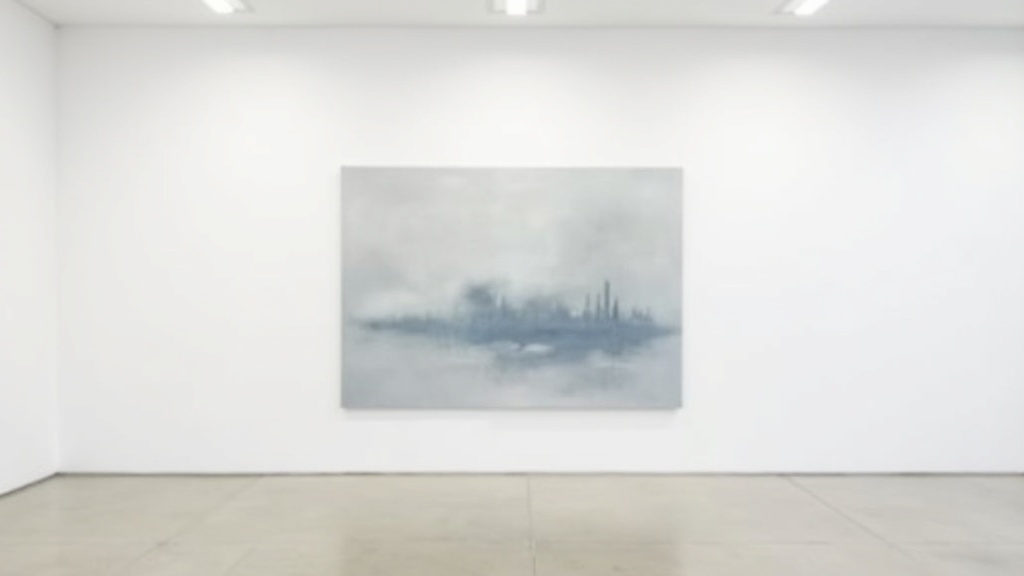
The paintings are spare. Schjerfbeck worked in muted palettes—grays, soft blues, pale greens, whites—with visible brushstrokes that feel almost sculptural. She wasn't trying to hide the paint or the process. You see the marks, the scraping, the way she built the surface. It's intimate work, even when the paintings are large.
The exhibition spans nearly 60 works across her entire career, so you get the full arc: early realist portraits and landscapes influenced by French Impressionism, then a dramatic shift into something more expressionistic and abstract. By her later years, the paintings are almost skeletal—just the essential elements, stripped down to their core.
What's remarkable is how this progression doesn't feel like a departure. It feels inevitable. Like she was slowly removing everything unnecessary until only the essential remained.
Why This Matters Right Now
In a moment when we're drowning in visual information, when every image is designed to grab your attention and hold it, Schjerfbeck's work feels radical. These paintings don't shout. They whisper. But somehow that makes you listen harder.
She was working at the same time as the big names—Matisse, Picasso, the Expressionists. But she wasn't in their circles, wasn't part of the European avant-garde machinery. She was in Finland, doing her own thing, developing her own visual language. The Met's installation makes this clear: this is modernism from the margins, and it's just as important as the stuff that got all the attention.
The exhibition also does something I love: it shows her self-portraits across decades. You watch her age in these paintings. She's looking directly at you—unflinching, honest, sometimes vulnerable. There's no vanity here. Just a woman, looking at herself, and painting exactly what she sees.
What Hits Hardest
The late work. The paintings from the 1930s and 40s are almost abstract—just fields of color, suggestion rather than description. A face becomes a few marks. A landscape becomes light and shadow. But they're not empty. They're full of feeling. It's like she figured out how to paint emotion directly, without needing representation as a middleman.
There's one portrait—I won't spoil which one—where her face is barely there. Just color and form. But you feel the presence more than if she'd painted every detail. That's the skill.
The Practical Stuff
Exhibition: Seeing Silence: The Paintings of Helene Schjerfbeck
Location: The Metropolitan Museum of Art, Fifth Avenue, Gallery 964 (New York)
Dates: December 5, 2025 – April 5, 2026 (currently on view)
Admission: Free with museum admission (suggested $30, but pay-what-you-wish)
Hours: Tuesday–Sunday, 10am–5pm (Friday–Saturday until 9pm)
Website: metmuseum.org
Is It Worth Your Time?
Yes. Absolutely yes. Even if you've never heard of Schjerfbeck, even if you're not sure you like "modern art," go see this. The paintings are accessible without being simple. They're quiet but they're not boring. You'll stand in front of them and feel something shift.
Take someone who says they don't understand contemporary art. These paintings might be the gateway drug they need.
The show runs through April 5, so you have time. But don't wait too long. This is the kind of exhibition that reminds you why museums matter—why seeing art in person, in a gallery, with space and light and silence around it, is completely different from looking at images online.
Go see it.