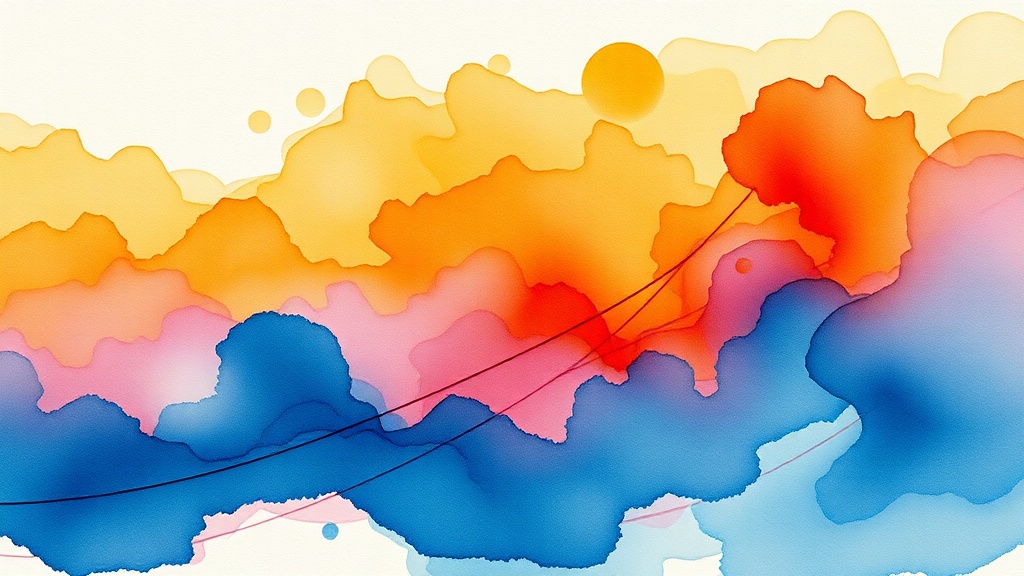
Mastering the Art of Glazing with Watercolor

Quick Tip
Always ensure your first layer is completely dry before applying a second wash to prevent lifting.
The Magic of Layering: Mastering the Art of Glazing
In the world of watercolor, there is a certain kind of magic that happens when you stop thinking about single applications of color and start thinking about transparency. This is the essence of glazing—the technique of layering thin, transparent washes of color over dried paint to create depth, luminosity, and complex hues. If you’ve ever felt frustrated that your colors look "muddy" or flat, the secret usually lies in mastering this delicate dance of light.
Glazing isn't just about adding color; it’s about how light travels through each new layer, hits the white of the paper, and bounces back to your eye. It is much like the art of repairing with gold, where each layer adds a new dimension of value and meaning to the original form.
The Golden Rules of Glazing
To achieve professional results without the pretension, follow these three fundamental principles:
- Wait for Total Dryness: This is the non-negotiable rule. If the bottom layer is even slightly damp, the new wash will lift the old pigment, creating a muddy mess. Use a hairdryer if you are impatient; your art will thank you.
- Control Your Pigment Concentration: Each subsequent layer should be a very dilute, transparent wash. Think of it as a veil of color rather than a thick coat of paint.
- Watch Your Edges: When applying a new glaze, be mindful of how the wet brush might interact with the edges of the dried shape.
A Step-by-Step Approach
- Establish Your Base: Start with your lightest colors and most diluted washes. This might be a pale yellow or a light ochre.
- Dry Completely: Ensure the paper is bone-dry to the touch.
- Apply the Second Layer: Using a clean brush and a highly diluted pigment (perhaps a transparent blue), lay the color over the dried yellow. You will see a soft, luminous green emerge.
- Repeat with Precision: Continue this process, building complexity. Much like mastering natural dyeing techniques, the beauty is in the patience and the gradual buildup of saturation.
"Glazing is the art of patience. It is the realization that beauty is rarely achieved in a single stroke, but rather through the thoughtful accumulation of light and pigment."
As you refine your technique, remember that watercolor is a medium of control and surrender. Don't be afraid to experiment with how different transparent pigments interact. Happy layering!