Saodat Ismailova's 'Amanat' at Swiss Institute: A Meditation on Memory, Myth, and What We Owe the Past

I walked into the Swiss Institute expecting a film screening. I left thinking about my grandmother, the stories she never told, and what it means to inherit a history that doesn't quite fit in words.
Saodat Ismailova: Amanat is the Uzbek filmmaker and artist's first solo exhibition in the United States, and it's the kind of show that unfolds slowly — first as sensation, then as meaning, then as something that stays with you for days after.
The Forest as Character
The centerpiece is Amanat (2026), a 36-minute film commissioned by the Swiss Institute that takes place in Arslanbob — a vast walnut forest in present-day Kyrgyzstan that has been considered sacred for centuries. The name translates roughly to "the place where you get lost," which is exactly what this exhibition invites you to do.
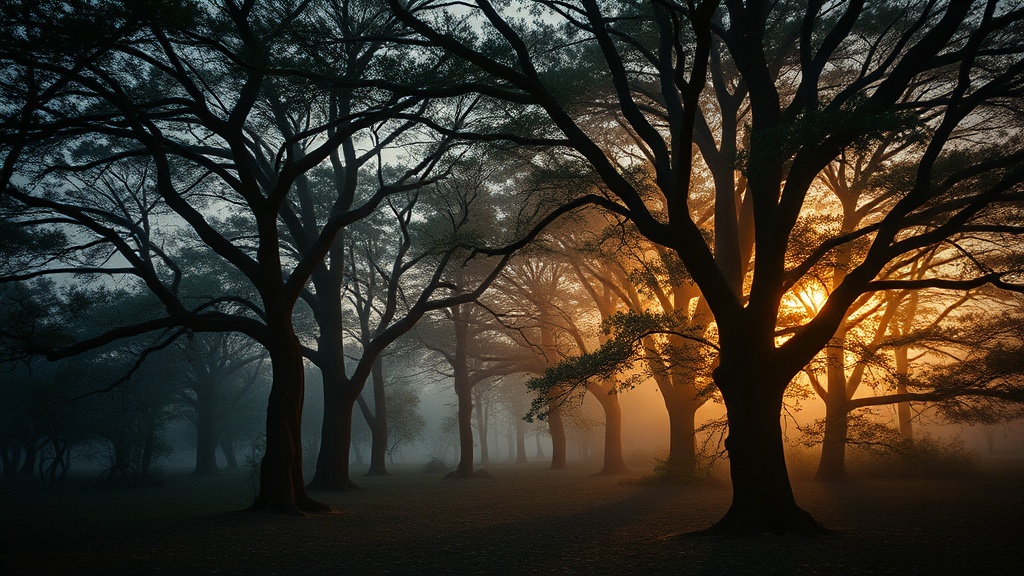
Here's what the film looks like: dense groves of ancient walnut trees shot in muted, twilight tones. Mist rising between trunks. A young protagonist collecting fallen nuts, the camera lingering on the texture of shells, the way light filters through leaves, the sound of footsteps on forest floor. Ismailova's cinematography is patient — she lets scenes breathe, sometimes for minutes, allowing the landscape to become a character in itself.
The narrative draws from a foundational Central Asian tale: an elder entrusts a young boy with a date seed and warns him not to fall asleep under the forest canopy. From the date grow walnuts, whose tannins induce hallucinatory states and haunting visions. The figure of Arslanbob appears to dreamers as a tiger, moving between human, animal, and spirit worlds.
In Ismailova's film, the protagonist does fall asleep. What follows is dreamlike in the truest sense — images that feel both ancient and immediate, personal and mythic. There are themes of loss, betrayal, and fractured truths, but they emerge obliquely, through image and sound rather than explicit narrative.
What Makes This Different
Ismailova isn't simply telling a folk tale. She's using the forest as a prism to examine how memory functions under political pressure. Arslanbob carries multiple histories: Alexander the Great's soldiers were reportedly healed by its walnuts, prompting him to spread the seeds across Europe. During the Soviet era, ethnogenesis projects forcibly reconfigured cultural identities in the region, creating lasting tensions between nomadic Kyrgyz and sedentary Uzbeks. Today, access to sacred sites within the forest is blocked as new power struggles reshape the terrain.
The film's protagonist was born just after the collapse of the Soviet Union — like Ismailova herself, who was born in 1981 and grew up in post-Soviet Uzbekistan. There's a generational resonance here: the question of what gets passed down when the ground beneath you is shifting, when the stories you've inherited no longer match the world you're navigating.
Amanat translates roughly to "that which is entrusted in one's care" — a sacred responsibility to honor, protect, and pass on. The exhibition takes this concept seriously as both theme and method.
The Installation Beyond the Film
What elevates this from a film screening to a full exhibition is how Ismailova extends the work's concerns into physical space.
In the gallery alongside the film are three sculptural objects that distill its metaphysical dimensions: a date pit cast in 18K gold, a walnut gathered from the actual forest, and a hybrid imagined seed made from gold that suggests myth's power to create new realities. These aren't merely props — they're material manifestations of the film's central concerns: what gets preserved, what transforms, what we choose to sanctify.
The sound design is crucial here. An immersive quadrophonic installation by field recordist Mélia Roger fills the space with the sensorial presence of Arslanbob — wind through leaves, distant water, the creak of ancient wood. It surrounds you, places you inside the forest even as you're standing in a white-walled gallery in the East Village.
Upstairs, the exhibition continues with additional elements that complicate and deepen the experience. A second sound work, recorded in the forest at night, plays in the reading room — it's designed to induce a drifting, hallucinatory state that mirrors the protagonist's dream journey.
The Swan Lake Connection
The second floor also houses Swan Lake (2025), a two-channel film installation that brings together archival footage from Central Asian cinema. The title references how Tchaikovsky's ballet was broadcast repeatedly on state television following the deaths of Soviet leaders and during moments of turmoil — a cultural constant during political chaos.
The footage includes scenes of Anatoly Kashpirovsky, the televised hypnotist whose sessions in the late 1980s attempted to proselytize audiences through regime-aligned messaging. Ismailova's grandmother was among those hypnotized, creating a personal connection that bridges transhistorical and technological parallels with the hallucinatory properties of the walnuts in Amanat.
Traditional kurpacha mattresses invite viewers to lie down and drift into this liminal space — the boundary between wakefulness and sleep, denial and transformation. It's a generous gesture, inviting physical participation rather than passive viewing.
What I Loved
The pacing. In an art world that often feels rushed, compressed into Instagram squares and 30-second attention spans, Ismailova insists on slowness. The film doesn't explain itself. The sculptures don't announce their significance. The sound installation requires you to stop moving and simply be present. This is work that respects the viewer's intelligence while acknowledging that some understanding arrives somatically rather than intellectually.
The cultural specificity. This is an exhibition deeply rooted in Central Asian history, mythology, and contemporary politics — but it never exoticizes or explains itself for Western audiences. Ismailova trusts that the emotional and sensorial registers are universal even when the specific references aren't immediately familiar. I found myself googling Arslanbob, Soviet ethnogenesis, Kashpirovsky — not because the work required this context to function, but because the work made me want to understand more.
The way it handles memory. So much contemporary art about history feels didactic or heavy-handed. Ismailova approaches the subject through dream logic, through the body, through the senses. The question isn't "here's what you should know about Central Asian history" — it's "how do we metabolize reality when the ground is shifting beneath us?"
What I'm Still Thinking About
The exhibition's final line in the press materials: "When cultural and ecological landscapes shift — or come under assault — do we stay bound or leave, hold on to past certainties or change?"
I've been thinking about this in relation to my own family's history — the stories my Taiwanese father never told about his childhood, the Nigerian traditions my mother adapted when she moved to New York. What gets passed on, what gets lost, what transforms in the passing. Ismailova's work doesn't offer answers, but it creates a space where these questions feel urgent and alive.
I'm also thinking about the title — Amanat, the sacred trust. What are we responsible for preserving? What do we owe the past? What can be spoken, what remains unspeakable, and what exists in the liminal space between?
The Practical Details
Saodat Ismailova: Amanat is at the Swiss Institute, 38 St. Marks Place, New York. The exhibition runs January 21 through April 12, 2026. Admission is free.
Hours: Wednesday–Sunday, 12–6pm; Thursday until 8pm. Closed Monday and Tuesday.
What to expect: Plan to spend at least an hour. The film is 36 minutes, but you'll want time with the sound installations and the upstairs component. The space is intimate — maybe 20 people max for the film — so consider visiting on a weekday if possible.
Related programming: MoMA is hosting a screening of Ismailova's films on April 6, 2026. The exhibition will travel to LUMA Arles and Kunsthalle Bern after its New York run.
Worth the Trip?
Absolutely. This is exactly the kind of exhibition that reminds you why contemporary art matters — not as investment or status symbol, but as a way of processing experience, of making sense of history and place and identity through image and sound.
Take someone who thinks they "don't get" video art. Take someone interested in Central Asian history or post-Soviet experience. Take someone who needs to slow down for an hour.
Go. Get lost in the forest for a while.