The 2026 Whitney Biennial Is Running. Here's What the Best Work by Women Actually Looks Like Right Now.
The Whitney Biennial is running. It's March 8. Both of those things are true at the same time, and every art publication is writing some version of "International Women's Day meets Contemporary Art." Most of those pieces are going to tell you that women are finally, meaningfully represented. That framing is tired and a little condescending.
So here's what I actually want to talk about: what the strongest work by women artists looks like in this moment — the qualities that separate pieces that stay with you from pieces that photograph well and evaporate. Because if you're going to spend time at the Whitney this spring, it helps to know what you're looking for.
Not "women are finally represented." That framing is done. Let's talk about the work.
The Work That Refuses Resolution
The installations I've found most difficult to shake — across galleries and institutions this past year — are the ones that refuse to conclude.
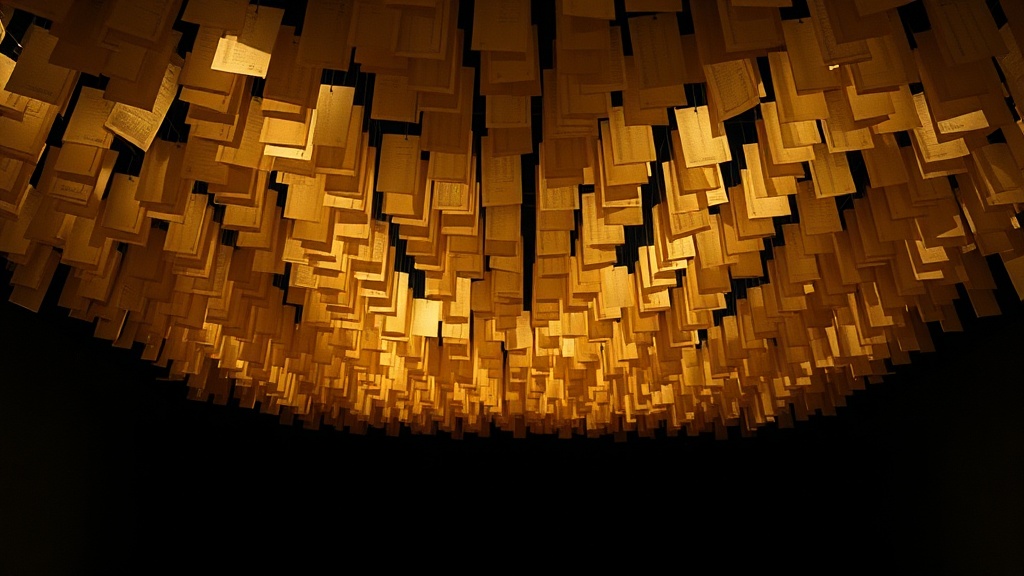
Think about what it would mean to walk into a room filled with thousands of hand-dyed paper sheets, suspended at varying heights on fine wire, each one covered in handwriting that isn't yours and doesn't belong to you. Letters that were never sent. A voice on the soundtrack, barely perceptible, slowed to below speech, looped. The concept sounds like it could come out precious or illustrative. It doesn't have to. The best versions of this kind of installation use scale and accumulation to create something physically vertiginous — you lose the edges of the room, you lose the light source, and you start to feel the sheer weight of what unsaid things accumulate to.
What earns that gravity is restraint. No narrative arc. No legible conclusion. The letters stay unread. The refusal of resolution is the argument.
That quality — sitting with the unresolved rather than packaging it — is one of the most reliable markers of work that's doing something real. When you find it in this Biennial, slow down.
Figurative Painting That's Sad, Not Aggressive
There's a strain of large-scale figurative painting by women dealing with the body — chronic illness, medical experience, bodies in institutional settings — that keeps getting described as "confrontational." It isn't. Or rather, that's not the interesting thing about it.
The figures in this work aren't confronting you. They're enduring. There's a difference.
What distinguishes the strongest examples: the palette refuses beauty in a specific way. Unlovely yellows. A bruised purple that keeps coming back. The particular gray of hospital hallways. Bodies mid-gesture, sometimes incomplete, sometimes with internal anatomy visible, sometimes just skin. Figures slumped in chairs with one arm visible and one arm behind the canvas edge — visually cut off, literally absent. Not to shock. To be quiet and accurate about what chronic illness actually does to presence.
When critics call this work "unflinching," they're reaching for something real but landing wrong. The better word is honest. And honesty at large scale — three, four feet of canvas — requires compositional confidence that smaller work sometimes can't sustain. That's a thing worth noticing: whether the conceptual and formal language that works at large scale gets diffuse when the artist tries it smaller. Strong work, even work with uneven canvases, reads as process rather than failure when the strongest pieces are genuinely strong.
The Archive as Argument
Some of the most politically serious work being made by women right now doesn't look political at first. It looks archival. Found documents. Institutional records. Internal memos explaining why certain works were purchased. Rejection letters explaining why others weren't.
The core argument — that art history is a bureaucratic decision, not an aesthetic one — isn't new. What's new in the best recent examples is the patience of the form and the specificity of the documentation. An installation that gives you forty acquisition memos from American museums across twenty-five years makes the pattern legible in a way that a thesis statement couldn't. You don't need to be told what to think. You read the memos. The logic becomes visible. (This quality of turning institutional history into visual argument is exactly what happens in work that treats art as architecture and history — when archives become the medium itself.)
The more interesting feminist argument in this kind of work often runs underneath the surface premise. It's not just about what was purchased or rejected. It's about the conservators — the women who handled these works for decades, uncredited, whose expertise kept objects intact while their names stayed out of the catalog. That's where the work gets quiet and the quiet gets sharp.
One Honest Dissent: The Immersive Environment Problem
I want to name something, because trust requires honesty.
There's a type of installation getting a lot of institutional attention right now — projected shifting light, scent elements, a soundscape, a central sculptural element with beautiful surface qualities. The press materials call it an inquiry into memory, diaspora, sensory knowledge. It is beautiful. Genuinely beautiful, in the way a spa with a good aesthetic director is beautiful.
But I'm not sure it's asking hard questions.
These environments are designed for comfort: warm light, enveloping sound, a scent somewhere between sandalwood and rain. You move through, feel something ambient, photograph the objects against projected light. You leave having had an experience.
The problem is that "diaspora and sensory knowledge" does a lot of work in the artist statement that the actual installation doesn't do. Beautiful objects that don't tell you anything. Evocative scents that don't specify anything. A mood rather than an argument.
This isn't nothing — mood has its uses. But it's worth knowing, when you're at the Whitney, that the work drawing the biggest crowds and the longest Instagram queues is often not the work that will stay with you. The pieces asking harder things frequently look quieter. Resist the Instagram gravity. Wander away from the crowd.
How to Move Through the Show
A few practical notes for visiting:
When: Weekday mornings are significantly less crowded. International Women's Day week will bring bigger crowds through Sunday — if you can go Tuesday through Thursday before noon, do that.
How long: Give yourself three hours minimum. The Biennial spans multiple floors and there's more than any single visit will cover. There's typically a documentary or film component included in Biennial programming that rewards the extra time if you have it.
What to prioritize: Find the installations that look harder to photograph. Slow down in front of things that don't immediately resolve. Bring a notebook — not for notes, but as a reason to look longer than you normally would.
Museum logistics: Check the Whitney's website at whitney.org for current hours, admission pricing, and any extended-hours programming. Biennial-specific programming often shifts across the run, so what's accurate in March may not hold in June. If you're planning a broader March gallery crawl, the city has exceptional shows running right now — 4 must-see gallery shows in New York this March if you want to structure a full day.
The context of International Women's Day is real and worth naming. The history of the Whitney Biennial is a history of whose work gets institutional validation, and that history has not always been neutral. One show doesn't fix institutional decades. But the strongest work being made right now — the installations that refuse resolution, the figurative painting that's honest rather than confrontational, the archive-based work that makes patterns legible through accumulation — isn't performing accessibility or optimism. It's demanding something from you.
That seems like the right note for this particular spring.
Go see it. Bring a notebook. Find the quiet rooms.
The 2026 Whitney Biennial is on view at the Whitney Museum of American Art, 99 Gansevoort Street, New York. Visit whitney.org for current hours, admission, and extended programming details.
You might also enjoy: 5 Art Books That Will Change How You See Contemporary Art — to deepen your framework for looking at the work you encounter at the Biennial.