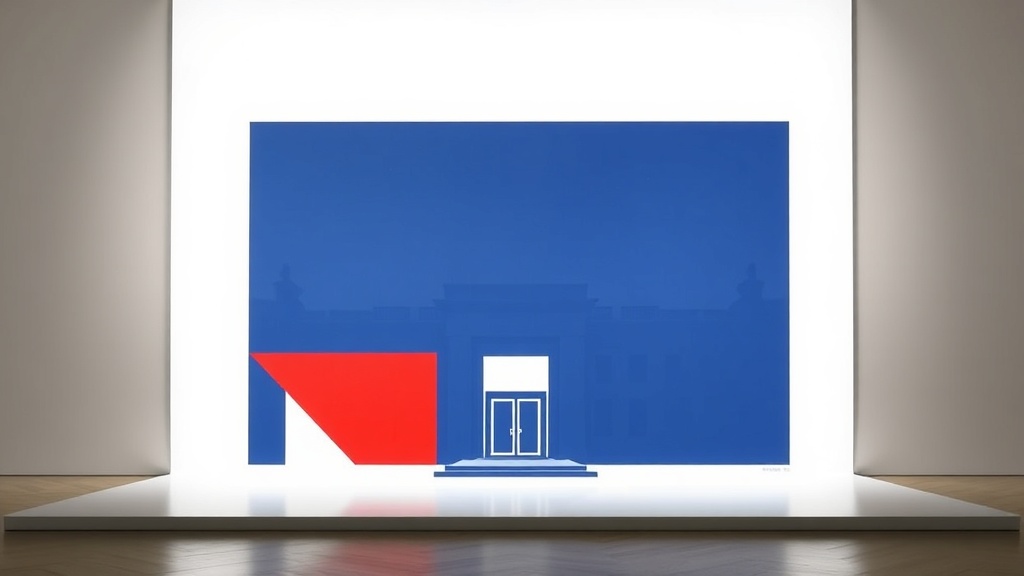
The Whitney Biennial 2026 Preview: 56 Artists, One Big Question
The Whitney Biennial opens March 8, and this year's edition feels different. Not because the format has changed — it's still the longest-running survey of contemporary American art, still co-curated by Marcela Guerrero and Drew Sawyer with Beatriz Cifuentes and Carina Martinez — but because of what it's asking us to consider.
56 artists. 56 ways of looking at what it means to exist alongside one another right now.
The Theme: Not What Art Is, But How We Relate
The curators describe this Biennial as an examination of "relationality" — the word museums love and regular people find suspicious. But stick with me, because what they're actually doing matters.
The works here explore how we connect across differences: interspecies relationships (think about how we live alongside animals and plants), family ties (chosen and biological), political entanglements (the mess of living in a connected world), technological relationships (what it means to be human when AI is everywhere), shared myths (the stories that bind us), and infrastructure (the invisible systems that shape our lives).
It's a show about coexistence during what the curators call a "moment of profound transition." They're not wrong. Everything feels like it's shifting — politically, environmentally, technologically. Art that tries to capture the present inevitably ends up asking questions about where we're going.
What I'm Watching For
The artist list is the most diverse in recent memory. You've got established names like Andrea Fraser (whose institutional critique pieces have been essential reading for decades) and Samia Halaby (the 88-year-old Palestinian abstract painter whose work deserves every bit of recognition it's finally receiving). But I'm just as interested in voices I don't know yet.
Precious Okoyomon, the poet and artist whose installations often explore Black ecologies and queer futures, has been on my radar since their 2019 Venice debut. They bring a practice that's equal parts installation, poetry, and environmental meditation — exactly the kind of boundary-crossing work that makes Biennials interesting.
Sung Tieu, a Vietnamese artist working in Berlin, explores how political systems manifest in bodies and spaces. Her work often feels urgent in ways that sneak up on you — you'll walk through it and realize hours later that you're still thinking about it.
Basel Abbas and Ruanne Abou-Rahme, the artist duo living between Brooklyn and Palestine, have been making some of the most necessary work about displacement, archives, and resistance. Their inclusion feels significant not just artistically but politically.
I'm also excited to see what Martine Gutierrez does with the Whitney's spaces — her self-portraits that interrogate gender, race, and art historical tropes are sharp, funny, and deeply sophisticated. And Jordan Strafer's video work, which explores power and spectacle through fragmented narratives, should benefit enormously from the museum's screening rooms.
The Aesthetic Question
The curators are promising a "vivid atmospheric survey" that foregrounds "mood and texture" rather than definitive statements about our moment. This is a smart approach — trying to capture "the present" in 2026 would be foolish. The present refuses to sit still.
What they're proposing instead are environments that evoke "tension, tenderness, humor, and unease." Which, honestly, sounds like walking through my own brain most days.
The risk with any Biennial is always the same: too many voices, not enough coherence. Or too much coherence imposed by curators who want to tell a single story. The best Biennials find a middle ground — enough connective tissue that the show feels intentional, enough room for contradiction that individual artists aren't reduced to illustrations of a theme.
This curatorial team's track record suggests they'll thread that needle. Guerrero and Sawyer have both done strong work centering underrepresented artists without tokenizing them. The fact that they've included collectives like CFGNY (a Brooklyn-based Asian American creative collective) and kekahi wahi (working across Hawaiian contexts) alongside individual practitioners suggests they're thinking seriously about how art gets made now — collaboratively, across borders, in response to specific communities.
The Practical Stuff
When: Opens March 8, runs through August 23, 2026
Member Previews: March 4–7
Where: Whitney Museum of American Art, 99 Gansevoort Street, Meatpacking District
Admission: $25 adults, $18 seniors/students, FREE for 25 and under (seriously, this is one of the best deals in New York)
Pay-what-you-wish: Fridays, 7–10pm
Plan on spending at least two hours. The Whitney's galleries flow well, but 56 artists is a lot to absorb. I'd recommend going on a weekday morning if you can — the space gets crowded on weekends, and some of the video and installation work needs room to breathe.
Why This Biennial Matters
Every Whitney Biennial is a snapshot, and snapshots age. Some editions feel dated within months. Others — like the 1993 Biennial that still gets discussed in art history classes — capture something about their moment that remains relevant.
I don't know if 2026 will be one of the memorable ones. But I know what I'm looking for: art that makes me see my own moment differently. Art that refuses easy answers. Art that takes the complexity of living in 2026 seriously without drowning in pessimism.
Relationality is a big word for a simple idea: we're all in this together, whether we like it or not. The question is what we do with that fact.
The Whitney Biennial 2026 isn't going to solve anything. Good art rarely does. But it might help us see the questions more clearly. And right now, that feels like enough.
I'll be at the member preview on March 4. Follow-up review coming after I've walked through it slowly, more than once.