Tracey Emin: A Second Life at Tate Modern — The Retrospective That Changes Everything

Tracey Emin: A Second Life
I went to Tate Modern expecting to see Tracey Emin's greatest hits — you know, My Bed, the neons, the confessional videos that made her famous in the 1990s. What I found instead was something far more moving: a 40-year career arc that proves this artist has spent four decades asking the same questions about vulnerability, survival, and what it means to turn your life into art. And the answer she's arrived at now? It's more powerful than anything she made before.
Here's what you're walking into: The Eyal Ofer Galleries at Tate Modern, filled with 90 works spanning painting, video, textiles, neons, sculpture, and installation. The exhibition opens with her earliest pieces — tiny photographs of paintings she created and then destroyed in the 1980s during a difficult period — and moves through her most recent work, which is almost entirely painting. The journey between those two points is the exhibition.
What Makes This Show Different
Yes, My Bed is here (the Turner Prize-nominated work from 1998 that scandalized Britain and made Emin a household name). But this retrospective isn't a victory lap. It's something more honest: a portrait of an artist who has spent 40 years telling the same story — her story — over and over, each time with more skill, more nuance, more understanding of what she's actually saying.
The early work is raw and shocking. Videos where she talks about sexual assault and trauma. Photographs of her destroyed paintings. Neon signs that spell out confessions: "I Felt You and I Undressed You with My Eyes." This is the Tracey Emin most people know — the artist who refused to separate the personal from the public, who made her pain into art and dared you to look away.
But then you get to the paintings. Recent paintings. And they're gorgeous.
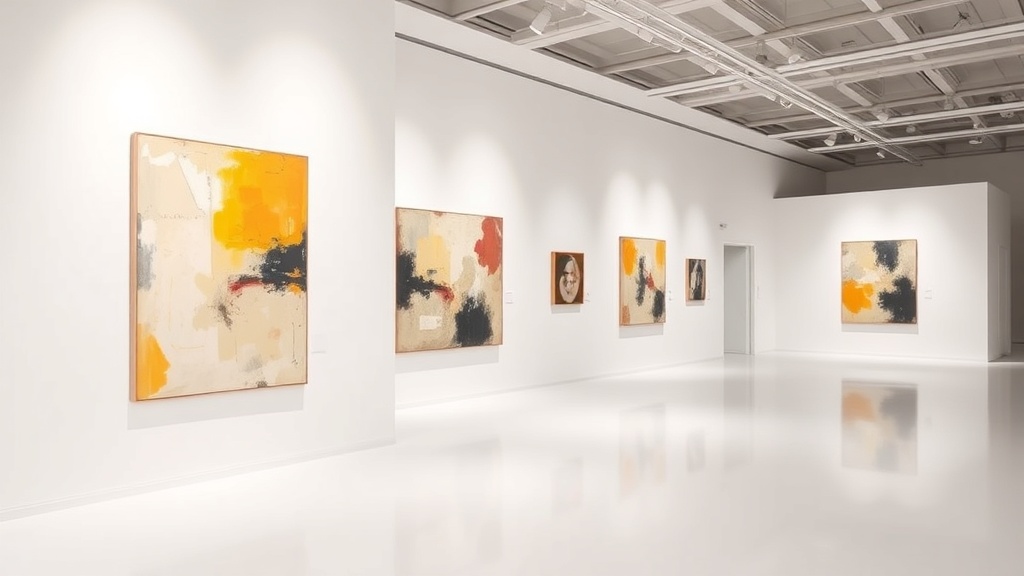
There's a series of large canvases where she's moved away from explicit confession into something more abstract, more painterly. The colors are rich — deep blues, warm golds, gestural marks that suggest emotion without spelling it out. "I Never Asked to Fall in Love — You Made Me Feel Like This" (2018) is a painting that could sit next to a Cy Twombly and hold its own. It's confident. It's mature. It's the work of someone who has spent decades mastering her medium and now knows exactly what she's doing.
The Emotional Architecture
What gets you in this exhibition is the progression. You start with raw trauma — literal destruction of her own work, videos of her at her most vulnerable — and you end with paintings that have transmuted all of that pain into something transcendent. It's not that the pain is gone. It's that she's learned to work with it, to channel it into color and form and gesture.
There's a video work from 1995 called "Why I Never Became A Dancer" where Emin recounts traumatic events from her teenage years in Margate. It's devastating. But when you see it in context of the entire retrospective — when you understand that she's been processing those same events for 30 years through different media, different approaches — it becomes something else. It becomes resilience. It becomes proof that you can take the worst things that happen to you and make something beautiful.
The neons are still here — those iconic text pieces that made her famous — but they feel different now. Less shocking, more poignant. "The End of Love" (2024) is a recent work, and it's achingly simple: just those four words in neon, glowing in the dark. By the time you reach it, after seeing 40 years of Emin's work, it hits different.
Who Should Go
If you've ever felt like your pain is too big or too messy to make into something meaningful, this exhibition is for you. If you've ever wondered whether vulnerability in art is a weakness or a strength, Emin answers that question across 90 works and 40 years. If you think contemporary art is too cold or too conceptual, this is proof that the most powerful art comes from the most honest place.
You don't need to know who Tracey Emin is to be moved by this show. But if you've heard about her, if you've dismissed her as "that artist with the messy bed," this retrospective will change your mind. She's not making shock art. She never was. She's making art about what it means to be human — to be wounded, to survive, to transform pain into beauty.
The Practical Info
Exhibition: Tracey Emin: A Second Life
Where: Tate Modern, Bankside, London SE1 9TG
When: February 27 – August 31, 2026
Hours: Open until 21:00 Friday and Saturday; regular hours other days
Admission: £20 / Free for Tate Members
Concessions: Available; £5 for Tate Collective (ages 16-25)
Booking: Book tickets online
Content note: The exhibition includes works exploring trauma, sexual assault, abortion, and life-threatening illness. Emin is honest about her life, and this show reflects that honesty.
Worth the Trip?
Absolutely. This is one of the major retrospectives of 2026. Even if you're not in London, if you have the chance to visit this summer, make it a priority. Bring someone you love. Bring someone who says they don't understand contemporary art. Bring yourself. This is what happens when an artist spends 40 years telling the truth.
And if you're in London? You have until August 31. Go now while the crowds are manageable. Go multiple times if you need to. This is the kind of exhibition that reveals something new each time you look.