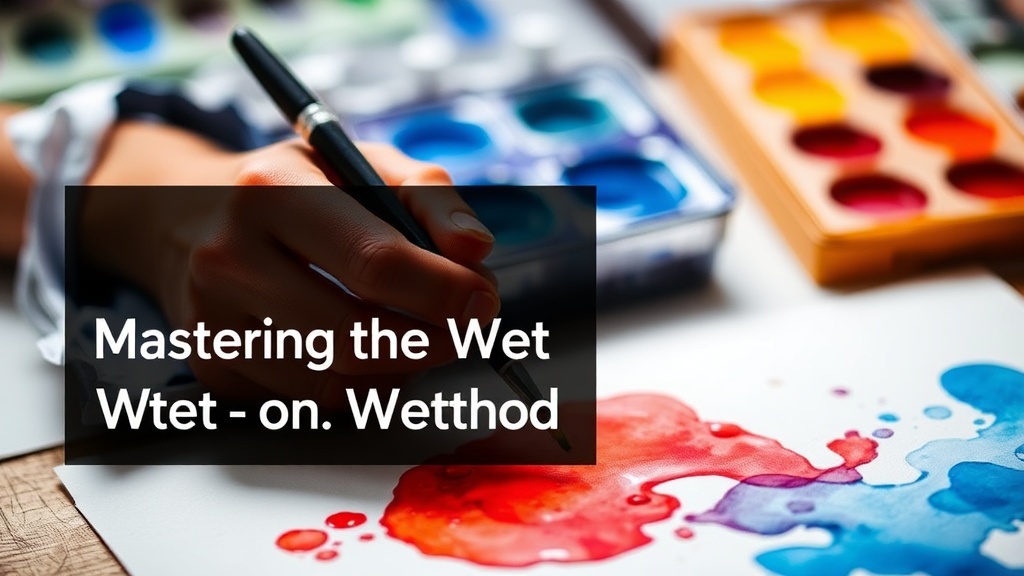
Watercolor Techniques for Beginners: Mastering the Wet-on-Wet Method

Watercolor painting can feel intimidating. The wet-on-wet technique — where pigment meets damp paper instead of dry — unlocks soft blends, ethereal skies, and fluid backgrounds that define the medium's magic. This post breaks down exactly how the method works, what supplies actually matter, and how to avoid the common mistakes that turn promising washes into muddy messes.
What Is Wet-on-Wet Watercolor Technique?
Wet-on-wet means applying paint to paper that's already damp. The pigment spreads organically, bleeding outward in unpredictable (but often beautiful) ways. It's the opposite of wet-on-dry, where brushstrokes stay crisp and controlled.
Here's the thing — this technique isn't just for advanced painters. Beginners often achieve better results with wet-on-wet than struggling to control hard edges they aren't ready for. The water does much of the work.
The physics behind it is simple: water molecules attract each other. When pigment-laden water meets wet paper, capillary action pulls the color outward. Too much water? The pigment runs everywhere. Too little? You get hard edges and blossoms (those weird cauliflower-shaped blooms nobody wants). The sweet spot is what painters call "shiny wet" — the paper glistens but doesn't pool.
What Supplies Do You Actually Need for Wet-on-Wet Painting?
Not much — which is part of the beauty. Quality paper matters more than expensive paints for this technique.
| Supply | Budget Option | Upgrade Pick | Why It Matters |
|---|---|---|---|
| Watercolor Paper | Canson XL Watercolor Pad (140 lb cold press) | Arches Cold Press (300 lb) | Heavy paper resists buckling under water |
| Brushes | Princeton Select Round #8 and #12 | Da Vinci Maestro Kolinsky Sable #10 | Soft natural hair holds more water |
| Paints | Winsor & Newton Cotman set | Daniel Smith Extra Fine | Transparency matters more than brand |
| Palette | White ceramic plate from home | John Pike Large Palette | Non-staining surface shows true colors |
The paper is non-negotiable. Cheap paper (90 lb or less) buckles, dries unevenly, and frustrates beginners into quitting. Start with 140 lb minimum — 300 lb if your budget allows. Canson XL works fine for practice. Arches holds up through multiple wet layers without pilling.
Worth noting: you don't need twenty colors. A limited palette teaches color mixing and creates more harmonious paintings. Start with ultramarine blue, cadmium yellow (or a cleaner hansa yellow), and a warm red like pyrrol scarlet. Add burnt sienna and Payne's gray. That's it.
How Do You Control the Water Without Losing the Magic?
Control comes from understanding drying stages — not fighting them.
Watercolor paper moves through distinct phases as it dries:
- Very wet — Puddles form; pigment moves dramatically. Good for initial washes and backgrounds.
- Shiny wet — The sweet spot. Paper reflects light but has no standing water. Details hold, edges stay soft.
- Damp/matte — Paper feels cool but doesn't shine. Hard to add new color without streaks.
- Dry — Back to square one. Wet-on-dry territory.
The catch? Timing varies by humidity, paper weight, and how much water you applied. A hairdryer helps — but use it on low heat from a distance. Too close and you push pigment into unwanted patterns.
Practice reading your paper. Touch it (gently, with clean knuckles). Look at the light reflection. After twenty paintings, you'll instinctively know when to drop in that second color for perfect blooms.
What Are the Most Common Wet-on-Wet Mistakes (And How to Fix Them)?
Blossoms, backruns, and mud — the unholy trinity of watercolor disasters. All three stem from water control issues.
Blossoms (those cauliflower edges) happen when wet paint hits drying paper. The wetter pigment pushes into the drier area, creating jagged edges. Fix: Keep an eye on drying time. If you see a blossom forming, lift it immediately with a thirsty brush or paper towel.
Backruns occur when water pools and dries unevenly, leaving dark edges. Prevention: Use less water. Seriously — beginners almost always use too much. The paper should feel damp, not flooded.
Mud results from overmixing colors on the paper. Three colors mixing wet-on-wet often turn brownish-gray. Limit yourself to two colors per area until you understand how pigments interact.
"Watercolor is the only medium where the white paper is your white paint. Once you lose it, you can't get it back. Plan your lights first." — Mary Whyte, contemporary watercolor portraitist
Speaking of light — that's another beginner trap. Wet-on-wet excels at atmospheric, luminous effects. It struggles with sharp highlights. Plan ahead. Masking fluid (Winsor & Newton makes a good one) preserves white areas. Or paint around your lights carefully.
Which Subjects Work Best for Wet-on-Wet Technique?
Skies, water, mist, and soft backgrounds — anything atmospheric. Wet-on-wet transforms simple sky washes into glowing sunsets. It suggests rippling water without painting every reflection.
Here's a simple exercise: Wet your entire paper with clean water. Touch ultramarine blue into the top third while it's still very wet. Add a warmer color (cadmium orange or yellow ochre) near the horizon line. Tilt the paper. Watch them blend into a credible sky.
That said, wet-on-wet isn't just for backgrounds. Dropping stronger pigment into still-damp areas creates soft-edged trees, distant mountains, and velvety shadows. The key is timing — add these details when the paper is shiny wet, not puddling.
Portraits? Absolutely possible, though challenging. Steve Mitchell's Mind of Watercolor channel demonstrates skin tone gradients that look impossibly smooth. The secret is multiple light glazes, each completely dry before the next.
Layering Wet-on-Wet Washes
Patience separates decent watercolor from great watercolor. Each wet-on-wet layer must dry completely before adding the next. Yes, completely — not "mostly dry" or "feels dry."
Why? Fresh wet paint hitting partially damp paper creates hard edges exactly where you don't want them. Those accidental lines ruin soft atmospheric effects.
Work on multiple paintings simultaneously. While one dries, start another. Professional watercolorists often have three or four pieces in rotation. Jeannie Douglas, a contemporary landscape painter, recommends this "assembly line" approach for maintaining flow state.
Building Confidence Through Deliberate Practice
Don't expect masterpieces immediately. Expect learning.
Dedicate your first ten paintings to pure technique. No subject matter — just washes. Gradated washes (dark to light). Variegated washes (blue fading into yellow). Controlled blooms (yes, they're possible with practice). Wet-on-dry edges meeting wet-on-wet areas.
Paint swatches. Document how different pigments behave — granulating colors (like ultramarine) create texture; staining colors (like phthalo blue) sink into paper fibers permanently. This knowledge builds intuition faster than jumping into complex scenes.
The art world loves gatekeeping. Galleries, MFA programs, auction houses — they all profit from making art seem inaccessible. Watercolor proves them wrong. A $20 pad of paper, three tubes of paint, and a single brush can create work that stops people in their tracks.
Start with wet-on-wet. Let the water teach you control through surrender. The results will surprise you.