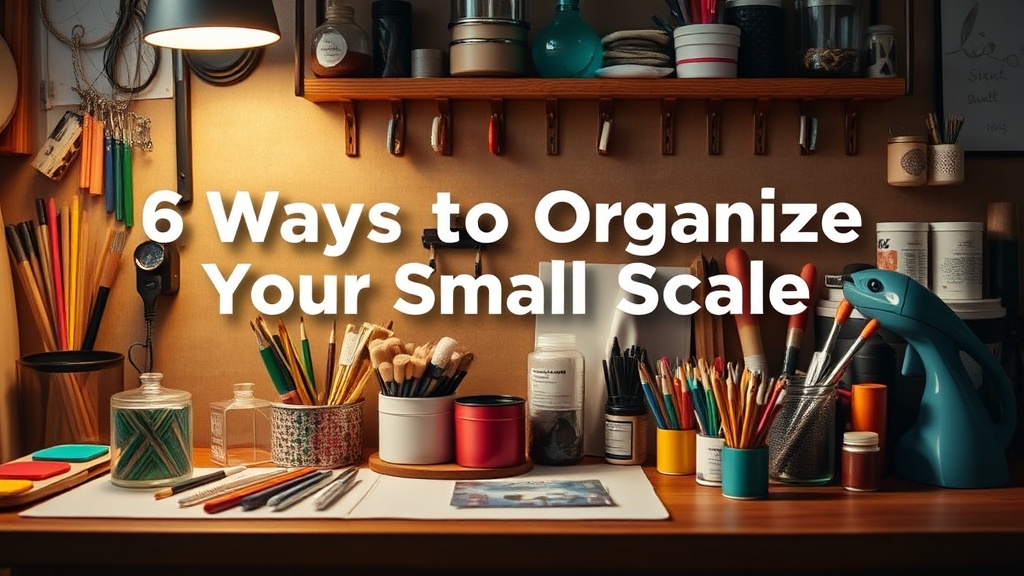
6 Ways to Organize Your Small Scale Art Supplies

Utilizing Vertical Wall Space
The Power of Modular Drawer Inserts
Clear Containers for Instant Visibility
Rotating Lazy Susanse for Palettes
Repurposing Everyday Household Items
Mobile Rolling Carts for Versatility
A single wayward tube of Cobalt Blue sits precariously on the edge of a desk, a dried smear of Crimson Lake marking the wood. Nearby, a jar of brushes leans at a dizzying angle, while tiny tubes of watercolor paint roll around a tray like lost marbles. This is the reality of a creative workspace that has outgrown its footprint. Organizing small-scale art supplies isn't just about tidiness—it's about making sure you can actually find that one specific 000 liner brush when the inspiration hits. This post explores six practical methods to organize your small tools, from pigment-heavy paints to delicate sketching implements, so your desk stays functional instead of chaotic.
How do I organize small art supplies in a tiny studio?
The best way to organize small supplies in a tiny studio is to utilize vertical space and modular containers that can be moved easily. When your square footage is limited, you can't rely on large, heavy shelving units. Instead, look toward your walls and the edges of your desk.
Think about a pegboard system. It’s a classic for a reason. You can hang scissors, tape dispensers, and even small trays for your palette knives. It keeps the "clutter" off your actual working surface, leaving room for your canvas or paper. If you're working in a bedroom or a corner of a living room, a pegboard is much less intrusive than a heavy bookshelf.
Another way to reclaim your desk is through tiered organizers. Those little acrylic spice racks or tiered makeup organizers are perfect for small tubes of paint or jars of pigment. They create levels, which means you aren't digging through a pile to find the one tube you need. It's about visibility. If you can see it, you'll use it. If it's buried, it's dead to you.
For those who really struggle with space, I often suggest looking into studio apartment layouts for inspiration on how to maximize tiny footprints. You don't need a massive loft to be a professional; you just need a system that works for your specific tools.
The Modular Approach: Trays and Tins
Sometimes, the best way to organize is to group things by "task." If you're working on a specific piece, you don't want to be hunting for a rag or a water jar halfway through a wash. I like to use small, stackable tins or even old metal lunchboxes for this.
One tin might hold your "sketching kit"—pencils, an eraser, a sharpener, and a blending stump. Another might be your "painting kit" with your most-used tubes and a small palette. This way, when you're done, you aren't cleaning up twenty different things. You just close the lid on the kit and move it to the side.
This is especially helpful if you're working in a multi-use space. If you're painting on the dining table, you can't leave a mess out. Having a dedicated, portable container makes the transition from "artist" to "human eating dinner" much smoother.
What are the best containers for paint tubes?
The best containers for paint tubes are airtight, transparent, and sized specifically to prevent pigment from drying out or leaking. You want something that protects the integrity of the paint while letting you see exactly what's inside at a glance.
Avoid those cheap, flimsy plastic bins that crack easily. Instead, look for something with a decent seal. Here is a breakdown of common storage options for different types of paint:
| Paint Type | Recommended Container | Why It Works |
|---|---|---|
| Watercolor Tubes | Clear Acrylic Drawers | Easy to see colors; prevents crushing. |
| Oil Paint | Metal Tin or Heavy Plastic | Resistant to oil seepage and spills. |
| Gouache | Small Plastic Organizers | Keeps moisture levels consistent. |
| Liquid Ink/Inkwells | Glass Jars or Ceramic Vases | Doesn't react with the pigment. |
If you use a lot of watercolors, a dedicated palette-style organizer is a must. Many artists use Winsor & Newton products, which often feature sturdy, well-designed palettes that keep your colors organized and ready for use. If you're just starting out, don't feel like you need to buy the most expensive storage; a simple, clear plastic bin from a craft store works just fine.
One thing to note—if you're working with heavy pigments, make sure your containers are easy to wash. You'll be cleaning them frequently, and you don't want a container that holds onto a permanent stain of Prussian Blue if you want to switch to a lighter palette later.
Organizing by Color or Medium?
There is a constant debate in the studio: do you organize by color or by medium? Personally, I think it's a bit of both. I keep my watercolors together and my acrylics in another spot. But within those groups, I always arrange them by color. It sounds simple, but it actually changes how you work. When you see the spectrum of your colors, you start to notice the relationships between them. It's a visual way to build your internal library of hues.
If you've already been working on building a better color palette, you know that understanding color is half the battle. Organizing your supplies by color helps reinforce that knowledge every time you reach for a tube.
How can I store brushes without damaging them?
The best way to store brushes is to keep them upright, either by the handle or by the ferrule, in a protected environment away from direct sunlight and moisture.
Never, under any circumstances, store your brushes in a jar filled with water overnight. This is a one-way ticket to ruined bristles and a moldy mess. If you need to keep them in a jar, make sure it is a dry jar.
For small-scale artists, I recommend using a silicone brush roll or a specialized brush-holding stand. A roll is fantastic because it keeps the bristles protected and makes the whole kit portable. If you're at a desk, a simple ceramic mug is fine, but only if the brushes are clean and dry. If you're using a mug, place a few pebbles or coffee beans at the bottom to keep the brushes standing upright and prevent them from clumping together.
Keep your brushes in a cool, dry place. Heat can make the glue in the ferrule brittle, and moisture can lead to rot. It's a small detail, but it's the difference between a brush that lasts a decade and one that falls apart in a month.
The Importance of Labeling
If you use unlabeled jars or opaque bins, you are essentially playing a guessing game every time you want to work. Labeling might feel a bit "un-artistic," but it's a massive time-saver. Use a simple label maker or even just a piece of masking tape and a permanent marker. Label the lid, not the side, of your containers. This way, when they are stacked, you still know what's inside. It's a small thing, but it prevents the frustration of opening five different jars just to find your masking fluid.
If you're working with a lot of different mediums, a color-coded system is even better. Maybe blue tape is for water-based media and red tape is for oil-based. It's a quick visual cue that keeps you from accidentally dipping a watercolor brush into an oil medium—a mistake that's a nightmare to fix.
Can I organize my art supplies in a drawer?
Yes, you can organize art supplies in a drawer by using adjustable dividers and shallow trays to prevent items from sliding around.
Drawers are great for hiding the "mess" when you're done for the day, but they can quickly become a junk drawer if you aren't careful. The key is to use shallow trays. I'm talking about the kind of trays you might see in a hardware store for screws or small parts. They are perfect for keeping your erasers, sharpeners, and small clips in their own little zones.
If you have a deep drawer, don't just throw things in. Use the "layering" method. Keep the things you use every single day (like your primary pencils or your most-used brushes) in the top layer. Keep the things you use occasionally (like specialized carving tools or heavy-duty erasers) in a lower layer or a separate bin.
When you're working in a limited space, you'll often find yourself asking where to paint when there's no room for a studio. A well-organized drawer is your best friend in these situations. It allows you to pack your "studio" away into a single, compact unit that can be tucked under a bed or into a closet. It makes your art life mobile and adaptable.
The goal isn't to have a perfect, Instagram-worthy studio. The goal is to have a workspace where you can actually create without the friction of clutter getting in your way. Keep it simple, keep it visible, and keep it functional. Your art will thank you.