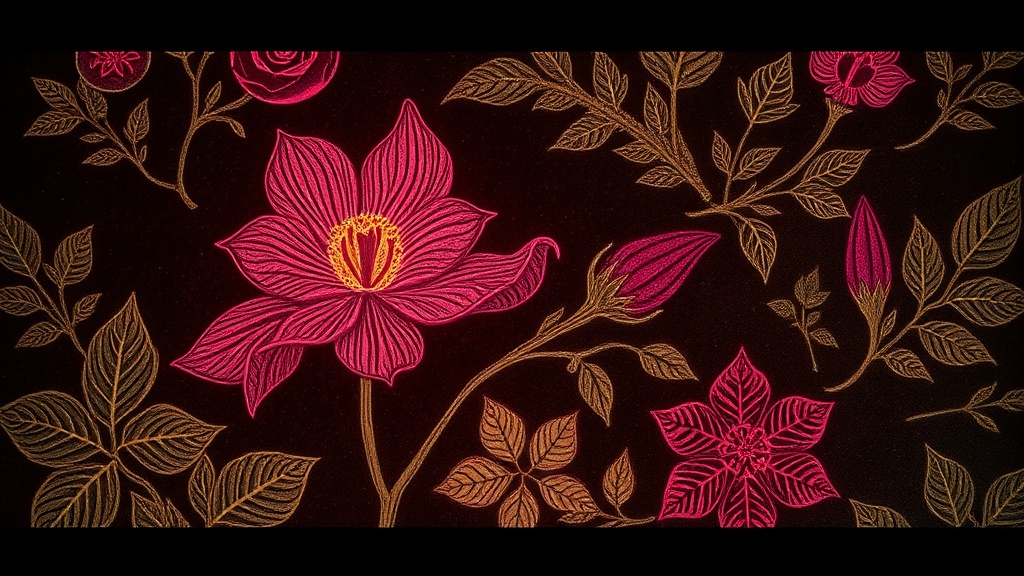
Etched in Light: Sculpting Botanical Textures with Drypoint Engraving

Have you ever looked at the intricate veins of a leaf or the velvety underside of a petal and wondered how to translate that tactile depth onto a flat sheet of paper?
The world of printmaking often feels shrouded in mystery, protected by heavy metal presses and intimidating chemical baths. However, one of the most visceral and rewarding techniques—drypoint engraving—requires very little specialized machinery to achieve profound, sculptural results. Unlike etching, which relies on acid to bite into a metal plate, drypoint is a direct, physical process. You are essentially "sculpting" into the surface of your medium, creating a physical ridge known as a burr. This burr is the secret to the technique's signature soft, velvety line, making it the ideal method for capturing the organic, unpredictable textures of the botanical world.
In this guide, we will move beyond the basic scratch and focus on how to manipulate physical resistance to create depth, light, and organic form. Whether you are working with copper, zinc, or even modern polymethyl methacrylate (PMMA/acrylic), the goal is to treat your plate not just as a surface, but as a landscape of highs and lows.
Selecting Your Canvas: Metal vs. Plastic
The choice of plate dictates the "personality" of your botanical textures. For high-end, professional editions, copper is the gold standard. It is soft enough to allow for controlled engraving but durable enough to withstand multiple print runs. If you are looking for a more accessible entry point, zinc is a fantastic alternative; it is slightly more brittle and reacts more aggressively to the tool, which can actually help in creating the rugged, weathered textures found in tree bark or dried seed pods.
For those who want to experiment without the cost of metal, clear acrylic or Plexiglass plates are exceptional. They allow you to work in reverse with ease, and because they are transparent, you can place a botanical specimen directly underneath the plate to trace the exact morphology of a leaf or flower. This is particularly useful when you want to ensure anatomical accuracy before you begin the heavy lifting of texture building.
The Toolkit: Beyond the Basic Needle
To achieve sculptural depth, a standard fine-point etching needle is rarely enough. You need tools that can manipulate the burr—the jagged edge of metal pushed up by your tool. To create the varying weights of a botanical sketch, consider the following:
- Diamond-Point Stylus: Ideal for incredibly fine, hair-like textures such as the delicate fuzz on a sage leaf or the thin filaments of a lily stamen.
- Heavy-Duty Engraving Burin: Use this for the "structural" lines of your plant—the thick central vein of a leaf or the sturdy stem of a sunflower.
- Scrapers and Burnishers: These are your "erasing" tools. A scraper removes unwanted burrs, while a burnisher can be used to flatten a raised area, effectively "lighting up" a section of the print by reducing the ink capacity.
- Sandpaper (Various Grits): Using fine-grit sandpaper on the plate surface can create a subtle, stippled texture that mimics the matte surface of certain petals.
Phase 1: Mapping the Botanical Architecture
Before you commit to deep grooves, you must establish the skeleton of your subject. When working with botanical forms, avoid the temptation to start with the small details. Instead, focus on the structural weight. If you are drawing a Monstera leaf, start with the primary and secondary veins. Use a light touch with a diamond-point stylus to map out the silhouette.
A common mistake is to treat the line as a static boundary. In reality, a botanical form is a volume. As you map your subject, think about where the light hits the plant. If a leaf is curling toward the viewer, the lines on the "shadow side" should be thicker and more heavily incised. This is a perfect time to apply the principles of creating depth through shadow, even though you are working with physical incisions rather than pigment. The way you plan your lines now will dictate how much ink they hold later.
Phase 2: Sculpting the Texture
Once your map is established, it is time to build the "sculpture." This is where the distinction between a simple drawing and a drypoint engraving becomes clear. To create the illusion of texture, you must vary your pressure and your tool angle.
The Deep Groove (The Shadow): For the deep, recessed areas of a plant—such as the hollow where a stem meets a leaf—apply firm, steady pressure with a heavy burin. You want to create a deep trough that will hold a significant amount of ink. This creates a "black" that isn't just a color, but a physical presence on the paper. This technique is essential for creating the heavy, dark tones found in the center of a tulip or the deep shadows of a forest floor.
Textural Variation: If you are depicting a weathered or dried botanical element, such as a dead hydrangea head, use a jagged, irregular motion. Do not strive for smooth lines. The more "erratic" your tool movement, the more the plate will reflect the natural decay and ruggedness of the subject. This is a form of sculpting texture through mechanical resistance.
Phase 3: Inking and the "Wipe"
The most critical moment in drypoint is the inking. You are not just painting the surface; you are filling the valleys you have carved. Use a high-quality intaglio ink, such as Charbonnel or Akua, which has the viscosity required to stay within the grooves without bleeding excessively.
- Application: Use a stiff piece of heavy fabric (tarlatan) or a rubber squeegee to force the ink into the incised lines and the raised burrs. Ensure you are working the ink deep into the textures you’ve sculpted.
- The Wipe: This is where the light is "sculpted." Using a clean, soft piece of tarlatan, wipe the surface of the plate in a circular motion. The goal is to remove the ink from the flat surface while leaving it in the grooves.
- The Highlight: To create the brightest highlights—the parts of the leaf where the sun hits directly—use the palm of your hand or a very soft, clean cloth to "polish" the ink away. This is called "hand-wiping." A more aggressive wipe results in a cleaner, brighter highlight, whereas a lighter wipe leaves a "plate tone" that adds a misty, atmospheric quality to your botanical scene.
Technical Troubleshooting: Common Pitfalls
The "Fuzzy" Problem: If your print looks overly messy or "blurry," you have likely created too much of a burr. While the burr provides the beautiful velvety line, an oversized burr will catch too much ink and bleed into the surrounding areas, obscuring your fine botanical details. If this happens, use your burnisher to gently flatten the metal back down.
Final Thoughts on the Botanical Aesthetic
Drypoint engraving is an exercise in patience and physical connection to the medium. When you move from the digital precision of a drawing tablet to the tactile resistance of a copper plate, you are embracing the beautiful imperfections of nature. A botanical print should never look "perfect"—it should look grown. By mastering the depth of your incisions and the nuance of your wipe, you aren't just making a print; you are capturing the very essence of organic life in ink and light.
Steps
- 1
Prepare Your Plate
- 2
Sketch the Botanical Form
- 3
Etching the Lines
- 4
Inking the Plate
- 5
The Final Impression